

The Complete Guide to Buying a Handgun: Costs and Key Considerations
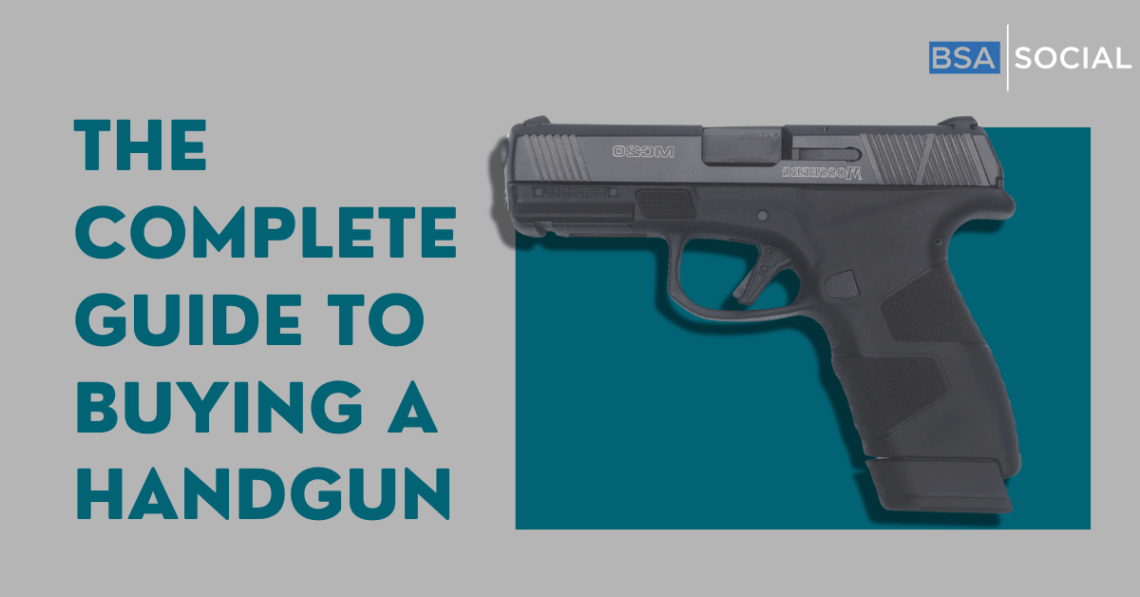

Buying a handgun can be a significant challenge for someone who is new to the firearms industry. From understanding your buying needs to fulfilling the legal requirements the process undertakes careful considerations. In this ‘handgun buying guide,’ we will walk you through the necessary insights for making an informed decision and a confident choice.
Understanding Your Purpose
The first step in buying a handgun is acknowledging your primary purpose.
Handguns serve a variety of functions, including:
Self-Defense: Compact handguns like the Glock 19 or Smith & Wesson M&P Shield are a popular choice among users whose main concern is self-defense. The price of these pistols ranges from $300 for entry-level versions to $700 when more sophisticated features are taken into account.
Recreational Shooting: Handguns such as Ruger Mark IV are an ideal choice for practice or plinking purposes, the pricing ranges from $400 to $700, depending upon the model you choose.
Hunting: Revolvers with large calibers are best suited for hunting down large animals, such as the Ruger Super Redhawk. These heavy revolvers can range from $800 and above if you choose a superior model.
Collection: Handguns that have historical significance or are limited edition, such as Colt Single Action Army revolvers, are more likely to be purchased by collection enthusiasts. These firearms are expensive due to their limited availability, the pricing often starts at $1,000 and reaches up to tens of thousands for more rare and antique pieces.
By effectively defining your purpose you can not only narrow down the options but can also make more cost-effective choices.
Understanding your intended use will directly influence the price range and features that best suit your needs.
Legal Considerations
Understanding and adhering to local, state, and federal laws is essential when purchasing a handgun. Regulations vary significantly by jurisdiction, so research the requirements in your area, including:
- Permits and Licenses: Many states will ask you for a handgun purchase permit or concealed carry license for acquiring a firearm.
- Background Checks: A detailed background check is conducted when you visit a store to buy a firearm. Federal law mandates background checks for all retail purchases, though private sales may differ.
- Storage and Transportation: Secure storage laws and transportation restrictions are crucial and are intended to be followed.
Consult your local law enforcement or a trusted firearms dealer for more detailed guidance on compliance.
Budgeting for Your Handgun
Handguns come in a wide range of prices, typically categorized as:
Budget-Friendly Options ($100–$300)
Few brands offer an affordable price range, such as Hi-Point and SCCY. These models may lack the advanced features and feel, but deliver efficient performance when compared to their price point and fulfill the basic needs of an individual. A few examples include:
- Hi-Point C9: A simple, robust 9mm pistol.
- SCCY CPX-2: Compact and affordable, ideal for concealed carry beginners.
Mid-Range Models ($300–$700)
In this price range, both quality and affordability factors are balanced. Manufacturers like Glock, Smith & Wesson, and Ruger are quite dominant in this price category, with their reliability and ergonomic designs.
- Glock 19: A versatile 9mm pistol, celebrated for reliability.
- Smith & Wesson M&P Shield: Compact, with enhanced ergonomics for concealed carry.
- Ruger GP100: A durable revolver ideal for target shooting and home defense.
Premium Firearms ($700 and Above)
High-end models from brands like Sig Sauer, Heckler & Koch, and Kimber feature superior craftsmanship and advanced features. These firearms offer the materials like stainless steel, titanium, and polymer ensuring more durability and extended life.
Examples include:
- Sig Sauer P226: Known for exceptional accuracy and reliability.
- HK VP9: An ergonomic striker-fired pistol with customizable grips.
- Kimber Custom II: A 1911-style pistol with match-grade components.
Remember: Budget for holsters, additional magazines, ammo, and cleaning supplies in addition to the cost of the firearm.
Types of Handguns
Understanding the differences between the different types of handguns is crucial for choosing the right model that fulfills your specific needs.
The two primary categories are:
Semi-Automatic Pistols
A semi-automatic pistol fires one shot each time the trigger is pulled. Basically, the handgun is automatically loaded by ejecting the cartridge after every shot.
These handguns utilize magazines for ammunition and offer quick reload times.
Examples include:

- Polymer Frame: Lightweight and durable, such as the Glock 17 and Smith & Wesson M&P series. Prices typically range from $300 to $700, depending on the features and accessories.
- Steel Frame: Classic and robust, like the Browning Hi-Power, often priced between $800 and $1,200 for standard models.
Revolvers

Revolvers comprise a rotating cylinder that contains multiple chambers for holding the ammunition. These are known for their simplicity and reliability, with examples including:
- Double-Action: The Ruger SP101 offers versatility for defense and recreation, priced around $600 to $800.
- Single-Action: The Colt Single Action Army embodies timeless appeal for collectors, with prices starting at $1,000 and going up significantly for rare editions.
Evaluating Handgun Features

Consider the following features when comparing different handguns:
Caliber
The caliber determines the size and power of the ammunition. Common choices include:
- .22 LR: Low recoil, affordable, and excellent for beginners.
- 9mm: Balanced performance for defense and recreation.
- .45 ACP: Heavier recoil, with greater stopping power for experienced shooters.
Ergonomics
Ergonomics in a gun refers to the specific design and build of the gun that enhances or maximizes its comfort, efficiency, and accuracy. For good ergonomics, you can consider good grips, better controls, and textured surfaces. You can visit a local armory to test out different models and identify which ones suit your needs.
Sights
Sights are the accessories that can be fixed on your firearm which can help you in more precise aiming. The goal of a sight is to make you aim more accurately. Some commonly used designs are laser sights, red dot sights, scopes, holographic sights, etc.
Trigger
A trigger is a switch that is present in the gun which when pressed or pulled activates the firearm and the bullet fire is discharged. Trigger pull weight largely impacts the accuracy and shooting experience.
Accessories and Modularity
The accessories are designed to enhance the effectiveness of the firearms in various aspects. Accessories like optics enhance the accuracy, lights to improve visibility in low light conditions, grips for better control and handling, and muzzle for reducing the recoil and noise while shooting.
Suppressor-Ready Handguns
Shooters who want to have a more suppressed shooting experience can opt for models that are equipped with silencers or muzzles. These models include threaded barrels and more elevated sights.

- FN 509 Tactical: Excellent ergonomics and reliability.
- Ruger Mark IV 22/45 Tactical: An ideal suppressor host in the rimfire category.
Note that suppressor ownership requires additional legal steps, including a $200 tax stamp and approval from the ATF.
Additional Costs to Consider
Owning a handgun involves more than the purchase price. Plan for:
- Ammunition: The ammunition costs can significantly vary depending upon your use and the caliber.
- Training: If you are a complete beginner you may need to attend professional courses to improve your skills and overall safety.
- Holsters and Storage: Always store your firearm in a secure place to avoid any unintentional use, this may cost you buying a secure case or holster.
- Maintenance: For proper maintenance of your firearm you will need to buy cleaning supplies, which adds up to another expense.

Making the Final Decision
Choosing the right handgun for yourself may seem a daunting task if you look at the variety of guns that are available in the firearms marketplace. You will need to balance both budget and preferences for choosing the right handgun. By effectively understanding your buying intent, understanding the legal considerations, budgeting for the firearm, evaluating different handgun features, and knowing the additional costs that may affect the total pricing, you can make a more informed decision and ultimately the right choice.
You can also seek out advice from seasoned professionals or reputable dealers, they may help you find the perfect handgun that caters to your needs.
Please Note:
Product pricing and availability may vary. Please verify current pricing and stock information from our website at https://www.bigstonesarmory.com.